RURAL UTAH SAVING HISTORY
A STATEWIDE INVESTMENT
WITH STATEWIDE IMPACT
- State managed funding program
- Annual legislative appropriation
- $24,000 for participating rural counties
- Funds part-time county archivist
- Funds one statewide RUSH Program Coordinator

RUSH FUND $400,000 - $500,000
Required annually to fund the program
STATE PARTNERS PROVIDE TRAINING AND MENTORSHIP

Archival Standards
Oral History and Training Resources
Community Engagement

Digitization Standards
Preservation and Best Practices
Records Management
RUSH PROGRAM COORDINATOR
Guides. Supports. Connects.
- Focuses on the gathering, preserving, and sharing needs and possibilities of each rural county
- Manages the application process and approval of county participants
- Individualizes organizational direction
- Coordinates training with state archives and history departments
- Encourages uniform standards
- Increases awareness of grants and funding opportunities in the counties
RURAL COUNTIES. RICH HISTORIES. STRONGER TOGETHER
SURVEY
Every Rural Community Has a Story Worth Preserving
Across rural Utah, dedicated volunteers, historical societies, museums, libraries, and local governments work tirelessly to preserve the stories that define their communities. The Rural History & Archives Funding Initiative Report below captures the experiences of nineteen rural counties, documenting how history is gathered, preserved, managed, and shared, while examining the funding needed to sustain these important efforts. The findings reveal both inspiring successes and significant challenges, providing the research that ultimately inspired the RUSH (Rural Utah Saving History) Program. Download the report to see how collaboration, strategic investment, and community partnerships can help preserve Utah's history for generations to come.
RURAL HISTORY MATTERS, BUT IT'S DISAPPEARING
Rural Archives at Risk:
A Statewide Gap in Preservation & Funding
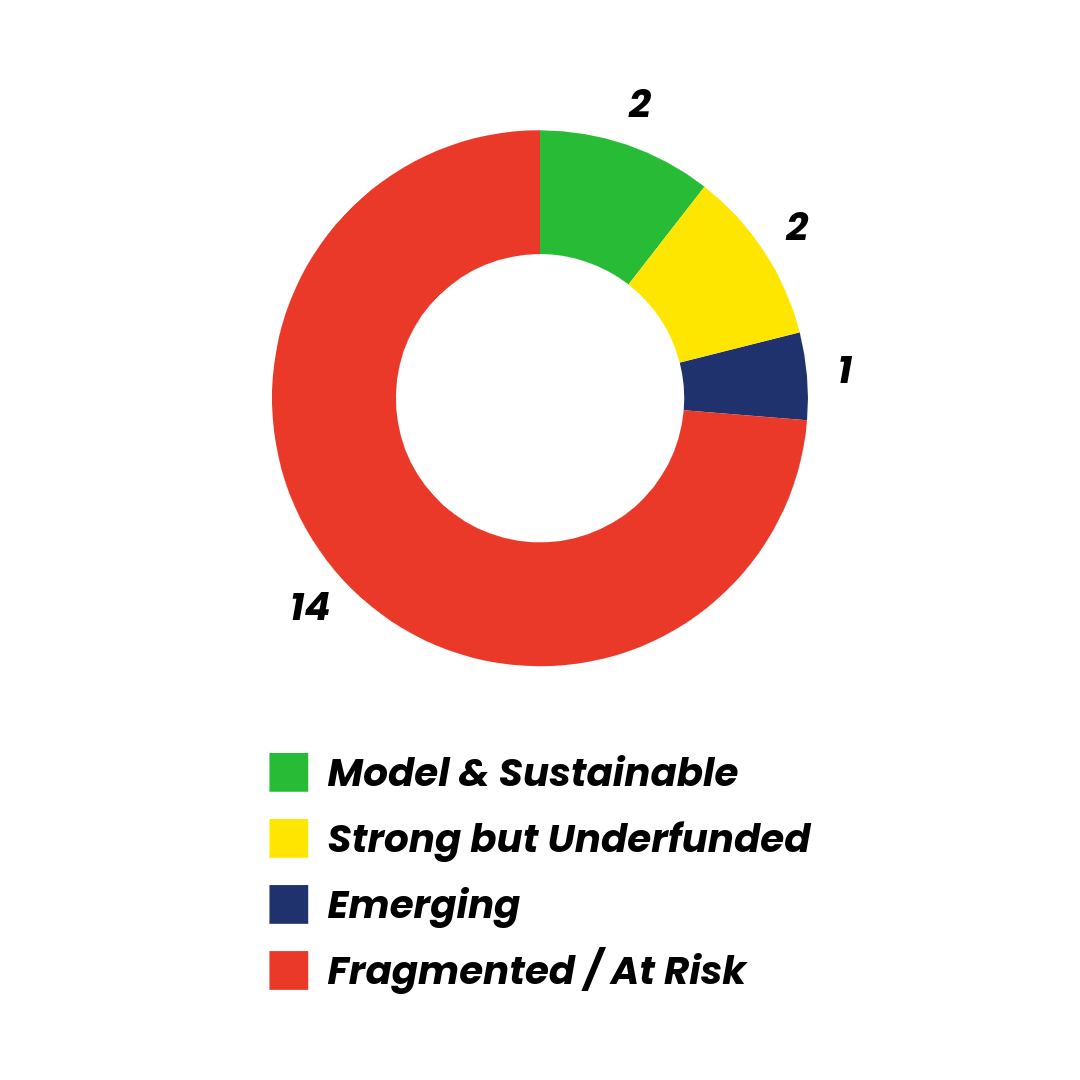
74%
RURAL COUNTIES AT RISK
lack coordinated, sustainable archival programs
+50%
of ALL UTAH COUNTIES history is disappearing
Rural County Survey Results
Nineteen rural counties, classes four through six, with populations under 40,000 were interviewed.
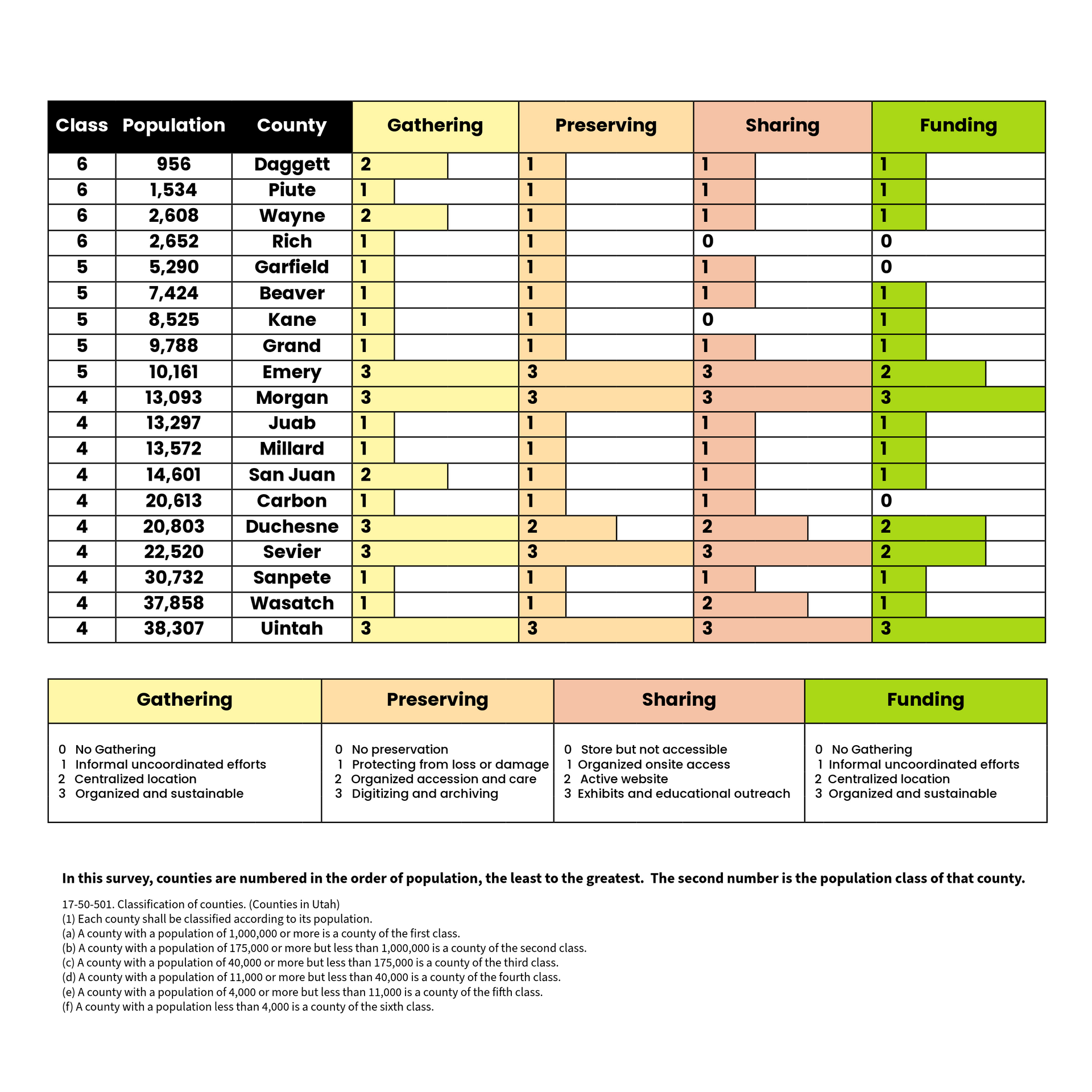
Preservation Should Not Depend on Population Size or Available Funding.
We invite community leaders, legislators, historical societies, archives, museums, libraries, tribal organizations, local governments, volunteers, and history enthusiasts to download this report and join us in building a stronger future for Utah's rural heritage through the RUSH Program.
19 COUNTIES. ONE SHARED RISK. ONE SCALEABLE SOLUTION
RUSH! RURAL UTAH SAVING HISTORY PROGRAM
A STATEWIDE SOLUTION TO PRESERVE UTAH'S RURAL STORIES
Nearly 80% of Utah's land area is rural, yet many communities lack the resources to preserve their history.
THE PROBLEM
The Reality in Rural Communities
Rural counties often rely on volunteers, small local budgets, scattered collections, and informal preservation efforts. Without coordinated support, historical records, photographs, maps, oral histories, and community memories are at risk of permanent loss.
- No coordinated archival systems
- Limited or no funding structures
- Collections scattered across locations
- Volunteers without training or standards
- Critical history at risk of permanent loss
RURAL HISTORY MATTERS, BUT IT'S DISAPPEARING
THE SOLUTION
From FRagmented to sustainable
A SCALEABLE STATEWIDE MODEL
The Rural Utah Saving History or RUSH Program proposes a scalable statewide support model designed to strengthen the gathering, preserving, and sharing of local history in underserved rural communities. This cost-effective framework combines state-supported funding, a State Rush Coordinator, part-time County History Coordinators, centralized training aligned with archival standards, and foundational digitization and preservation infrastructure.
By pairing local community involvement with professional guidance, the initiative creates a sustainable system that helps rural counties protect historical collections, improve public access, build grant-writing capacity, and develop long-term preservation strategies. Through partnerships with state agencies, universities, archives, museums, libraries, and non-profit organizations, this model aims to ensure that preservation support is accessible to all communities—regardless of population size or available funding.
- State-supported funding program
Sustainable annual funding - Part-time State Rush Program Coordinator
Guides, supports, and connects county coordinators - Centralized training aligned with archival standards
Delivered by Utah Historical Society and Utah Division of Archives and Record Services - Part-time County History Coordinator
Empowers counties with local leadership - Digitization and preservation infrastructure
Protects collections and ensures long-term access for future generations - Grant-writing support and navigation
Helps counties access additional grants, equipment, and project funding - Community Connections and collaboration
Partnerships with state, university, community, tribal, museum, library, and nonprofit organizations
HOW THE RUSH PROGRAM WORKS
1
COUNTY APPLIES
Three visionary residents with approval and support from the county commission apply for the RUSH program.
2
STATE TRAINING & SUPPORT
RUSH Coordinator and state partners provide individualized training, tools and guidence.
3
BUILD & GROW
Inventory, organize, digitize, gather stories, and build community partnerships with local organizations.
4
COMMUNITY BENEFITS LAST FOR GENERATIONS
Stories are preserved, shared and used to strengthen communities and inspire future generations.
BENEFITS FOR UTAH
lasting state impact
RURAL EQUITY
Every community's story is preserved and valued.
TOURISM & ECONOMY
Local history attracts visitors and supports local businesses.
EDUCATION
Provides local learning opportunities and resources for all ages
DISASTER RESILIENCE
Protects vital records from loss due to fire, flood and disaster.
STRONGER COMMUNITIES
Builds pride, unity, and engagement through shared heritage.
Every community has a story.
Together, we make Utah's story complete.
WHY IT MATTERS
wHEN RURAL HISTORY IS LOST, COMMUNITIES LOOSE PART OF THIER IDENTITY
Rural archives preserve more than documents—they protect the stories, people, traditions, and evidence that connect generations, strengthen community identity, support education and tourism, and ensure local voices are not forgotten. Investing in rural preservation is a lasting investment in the cultural, educational, and economic future of communities that would otherwise lack the resources to safeguard their own history.
Learn more about
Our Collaborative Preservation Model
Sevier County Archives and Heritage Services (SCAHS) serves as the county's central history hub, bringing together communities, organizations, and volunteers to gather, preserve, and share Sevier County's unique heritage. Through collaborative partnerships, accessible archives, and countywide preservation efforts, SCAHS helps ensure that local history is protected and available for future generations. Discover how our innovative community-based model is strengthening history across Sevier County.
Stay updated with the latest news through our newsletter and blog posts delivered straight to your inbox and follow us on Facebook.
Contact Us
Thank you for contacting us.
You will be added to our email updates list.
Unsubscribe any time by emailing us at sevierarchivist@gmail.com
Sevier County Archives and Heritage Services
Oops, there was an error sending your message.
Please try again later or email us at sevierarchivist@gmail.com
Sevier County Archives and Heritage Services
ARE YOU IN RURAL UTAH?
A COMMUNITY MEMBER, PART OF AN ARCHIVE, A HISTORICAL ORGANIZATION, A MUSEUM, OR LOCAL GOVERNMENT?
Thank you for contacting us.
We’ll get back to you as soon as possible.
We got it.
JOIN THE RUSH NETWORK
Join the Rush Program to play a vital role in preserving your community's rich history. By participating, you contribute to a digital archive that celebrates our unique identity through historical documents, photographs, maps, and captivating stories from every town. This is an invaluable opportunity to connect with fellow history enthusiasts, enhance public access to our heritage, and ensure that future generations can explore the rich tapestry of Utah's past.
Be a part of something meaningful.
Join us today!
ARE YOU A SUPPORTER OF HISTORY PRESERVATION?
Thank you for contacting us.
We’ll get back to you as soon as possible.
We got it.
Support Sustainable
Rural Archives
Sustaining rural archives requires ongoing funding, partnerships, and dedicated resources. Your support enables training programs, infrastructure upgrades, equipment, perservation supplies, and community outreach that protect local history for future generations. Join legislators, foundations, and donors committed to preserving rural heritage through strategic investment and collaboration by filling out this form.
We will connect with you, or call us at 435-893-0484 or schedule an appointment.
ARE YOU PART OF AN ARCHIVE, A HISTORICAL ORGANIZATION, OR A MUSEUM AND WILLING TO SHARE YOUR KNOWLEDGE OR CONNECT?
Share your archival skills to strengthen rural history preservation and collaborate with others in your field.
Thank you for contacting us.
We’ll get back to you as soon as possible.
We got it.
Share Your Expertise
We are building an Archives Resource Network to connect:
- State archives and agencies
- University archives
- Community archives
- Museums
- Libraries
- Nonprofit organizations
- Independent professionals
- Cultural Heritage Experts
You can:
- Share knowledge
- Teach workshops (virtual or in-person)
- Mentor rural archives
- Share resources, tools, templates, and workflows
- Partner on grants and initiatives
- Coordinate internships
Suggested areas of expertise:
- Digitization
- DACS / archival description
- Metadata
- Preservation
- Oral history
- Grant writing
- Community archives
- Collection management
- Digital preservation
- Outreach and public access
- Audio-visual management
- Collection Scope
You can share other ideas and ways you can help in the message section, or leave comments on our initiative or survey.
By connecting expertise from larger institutions with underserved communities, this initiative aims to strengthen preservation capacity and ensure that rural histories are not lost due to a lack of resources or access to professional support.
Thank you for sharing your time and expertise.